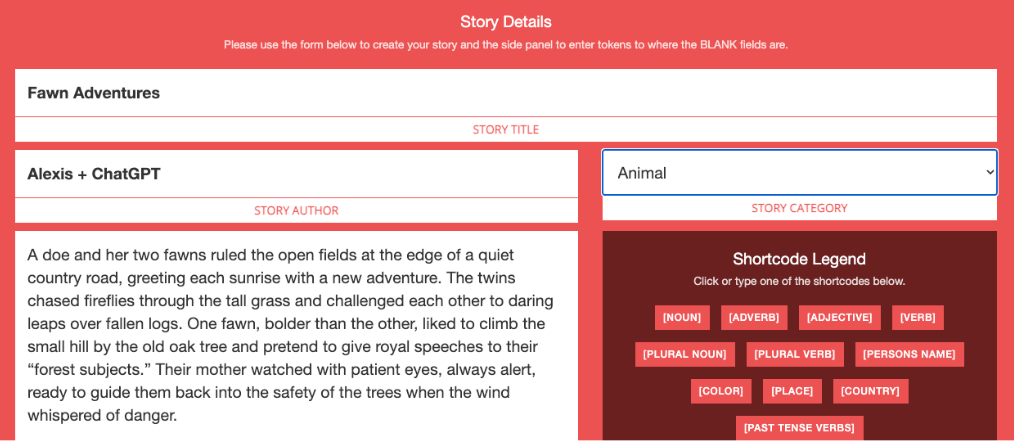
For this activity, I started with a detailed story about a doe and her two fawns.

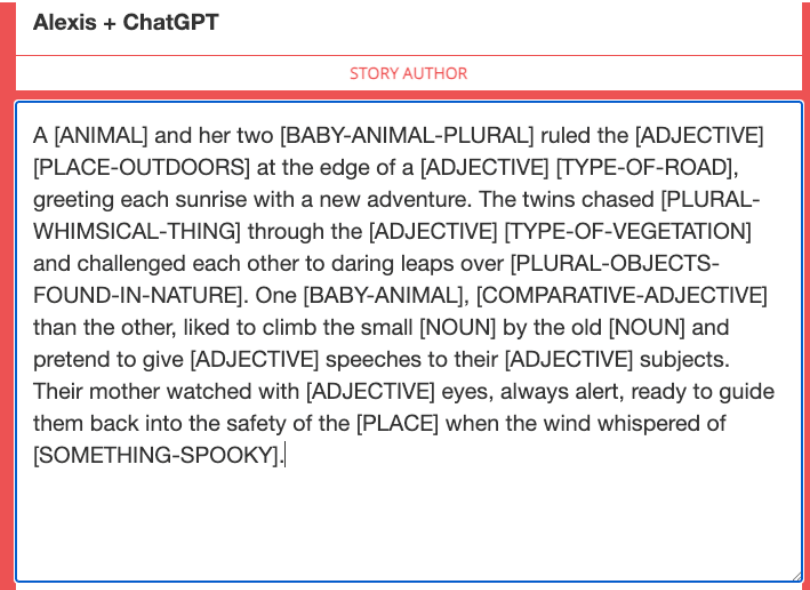
It was specific. It had setting, tone, personality, and imagery. Then I abstracted it. I used the WordLibs generator from The Word Finder to build and test the abstracted version of my story. I removed the specific nouns, adjectives, and details and replaced them with general word categories:
[ANIMAL], [PLACE-OUTDOORS], [ADJECTIVE], [PLURAL-OBJECTS-FOUND-IN-NATURE]. The structure of the story stayed the same, but the surface details were flexible.
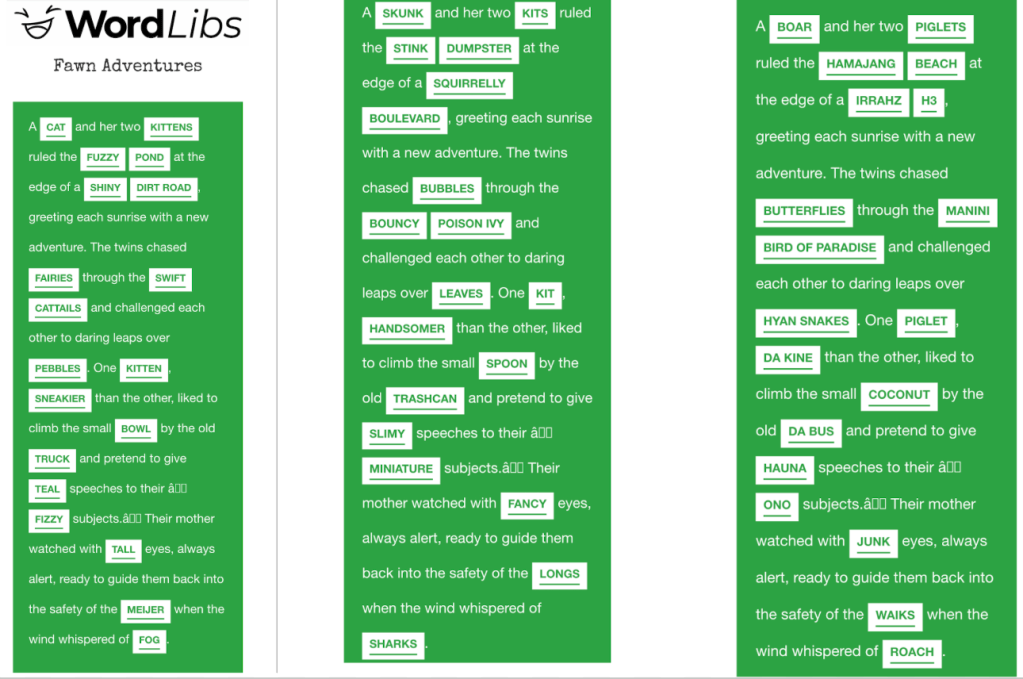
That change made something clear: abstraction preserves structure while loosening specificity.
After receiving feedback, I refined the blanks so the story would still make sense no matter how it was filled in. Too vague, and the story collapses. Too specific, and the creativity disappears. Finding that balance was the real challenge.
I tend to love when Mad Libs get a little silly, so I intentionally left some categories broader than others. That choice allowed the structure to remain stable while inviting unexpected humor. Having friends in Hawaii complete the story using pidgin added another layer of personality and variation, all within the same underlying framework.
This activity helped me understand abstraction in a new way. It is not about stripping something down randomly. It is about identifying what must remain constant and what can change.
The plot arc stayed the same. The characters, setting, and tone became variables. Abstraction made the story reusable. Once the structure is clear, the creativity can vary endlessly.
 Alexis Flanders
Leave a comment