My next unit focused on abstraction, and it pushed my thinking in a different direction.
In our first activity, I examined everyday examples of abstraction and identified what each one highlights and what it hides.
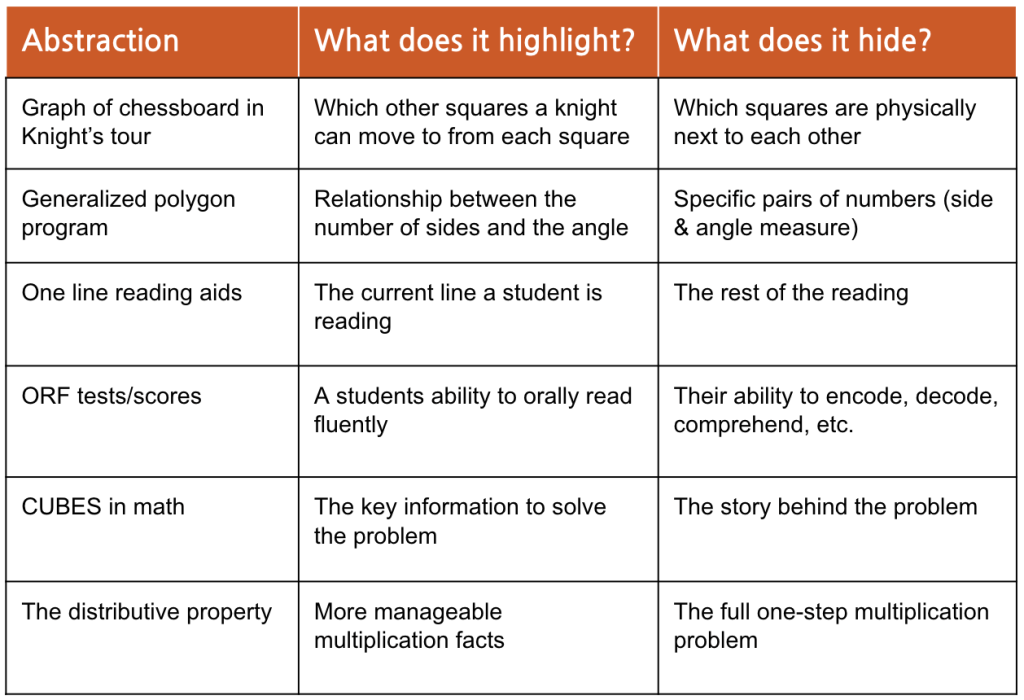
That framing helped make abstraction clear. A graph of a knight’s tour highlights possible moves but hides physical proximity. ORF scores highlight fluency but hide comprehension and encoding skills. The distributive property makes multiplication more manageable but hides the original one-step structure.
Abstraction is not about simplifying something randomly. It is about intentionally deciding which details matter for a specific purpose.
The second activity made that idea even clearer. I was asked to describe the same room for different audiences: an interior decorator, a renter, a family member, and even a dog sitter. The room did not change. The abstraction did.
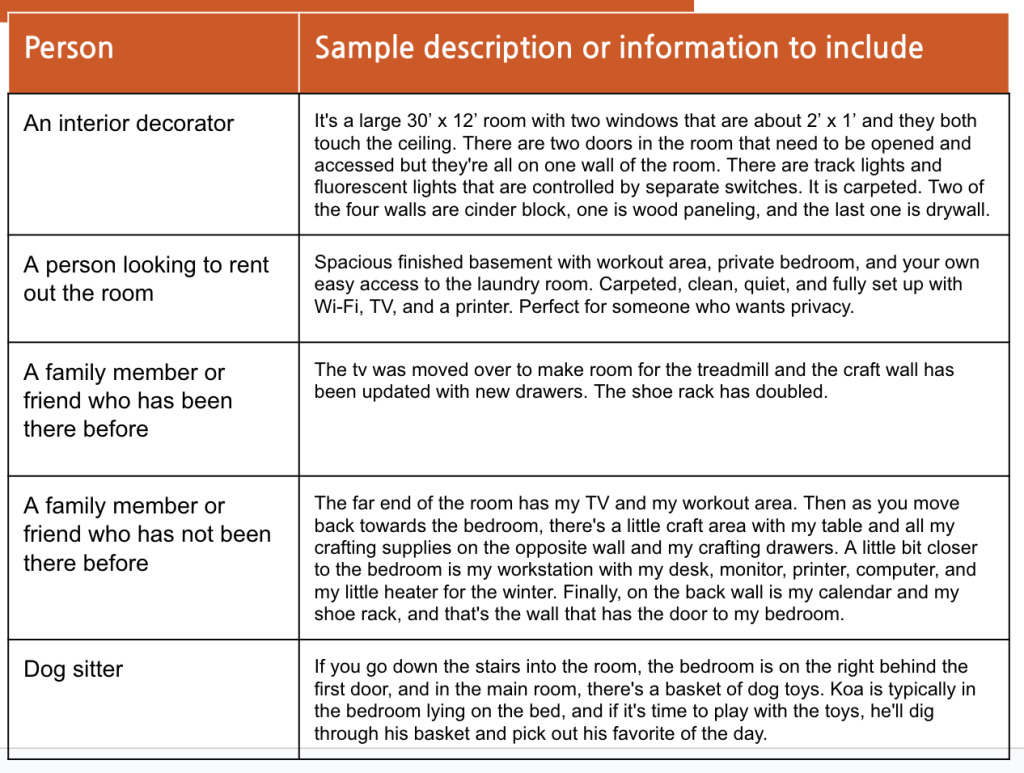
Each description emphasized different details depending on the goal. An interior decorator needed dimensions and materials. A renter cared about privacy and amenities. A dog sitter needed to know where the toys were and where Koa would likely be.
That activity made abstraction feel less technical and more tangible. We abstract constantly. We filter information based on context, audience, and purpose.
The most important takeaway for me is that abstraction always involves trade-offs. When we highlight one thing, we hide another. That matters in teaching. It matters in assessment. It matters in technology. Abstraction is not neutral. It is purposeful.
 Alexis Flanders
Leave a comment