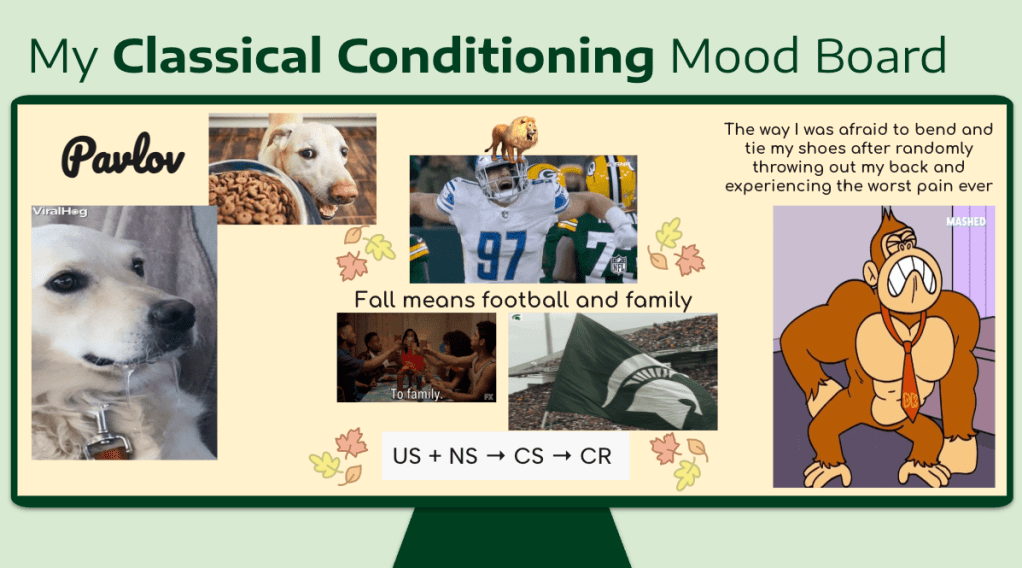
• My mood board has a few images reflecting Pavlov’s work with dogs. It was fun to read more about him because I never realized his findings were not his original intention.  I have added US + NS → CS → CR to show how CC works. I included a silly little GIF of DK hunched over, grabbing his back, because I was classically conditioned to be afraid of tying my shoes (CR). A few years ago, I was training for a run. I sat down to tie my shoes (as I ALWAYS had, also the NS), and when I stood up, I experienced the worst pain of my life (US). I was stuck lying on our tile floor for two days, made it to the chiropractor, and was walking hunched over for a few days after that. Now, I’ve added morning and evening stretching times to hopefully prevent that from ever happening again. 

    :sweat_smile:

    Lastly, I added fall, family, and football! This is my favorite time of the year. Football season is starting, and I grew up in a family that loves sports. We’ll tailgate, have watch parties, and eat great food! When the weather starts to cool down, I know all the family fun is about to start.

    When I think of negatives related to CC, I think of how it could be used to exploit young or vulnerable minds. I also am very curious about how it relates to media and our perception of things. When reading the point of ethical concerns related to CC being “manipulation of preferences, encouraging impulsive behaviors, and reduction of human agency,”  I was concerned and intrigued to learn more.
  • When I started Computational Thinking for K–12 Educators, I assumed we would jump straight into coding. Instead, my very first artifact was a third-grade geography lesson titled “Where Is Home?”

    The lesson asks students to use a world map to locate North America and Michigan relative to continents and oceans. At first glance, it looks like a straightforward social studies objective. But through this assignment, I begin to see computational thinking differently.

    Students break the world into smaller pieces: continents, then oceans, then North America, then Michigan. That is decomposition. They notice how continents are positioned relative to one another. That is pattern recognition. They focus only on the information necessary to find their location, ignoring extra map details. That is abstraction.

    Nothing about this lesson involves computers. Yet it fully encompasses computational thinking.

    This assignment shifts my perspective. CT is not a separate subject, but a way of thinking. It shows up in how students organize information, break down problems, and make sense of systems.

    My introduction to computational thinking does not begin with coding. It begins with a map.

  • This week, I was introduced to Microsoft MakeCode Arcade. I had an inkling I would like it, but I quickly realized I loved it.

    I began with the beginner skill map, working through guided projects to understand how sprites, movement, events, and scoring systems work together. My first two creations were simple games titled Animate It and Clicking Superstar.

    What stood out to me immediately was how accessible MakeCode felt. It is free, visual, and the coding blocks are fairly intuitive. I could see my code and my game side by side. I tested something, adjusted it, and instantly saw the impact of my changes. That feedback loop made experimentation feel safe and manageable.

    Even in these early projects, I was already engaging in computational thinking. I was decomposing tasks, recognizing patterns in block structures, sequencing events, and debugging when something did not behave as expected.

    More than anything, I found myself thinking about my classroom. MakeCode removes so many barriers. It does not require expensive equipment or prior coding experience. It invites creativity while still demanding logic and precision.

    That combination felt powerful.

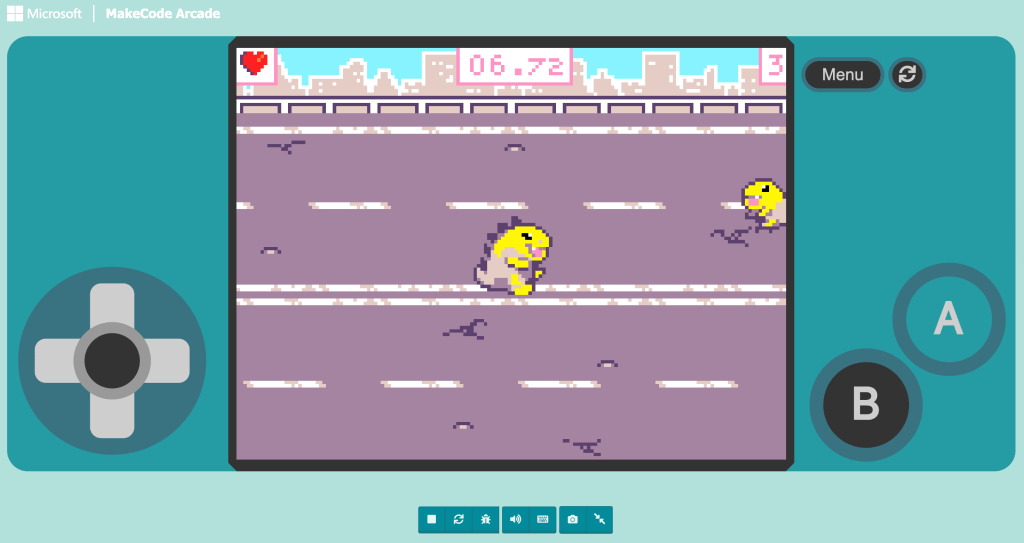
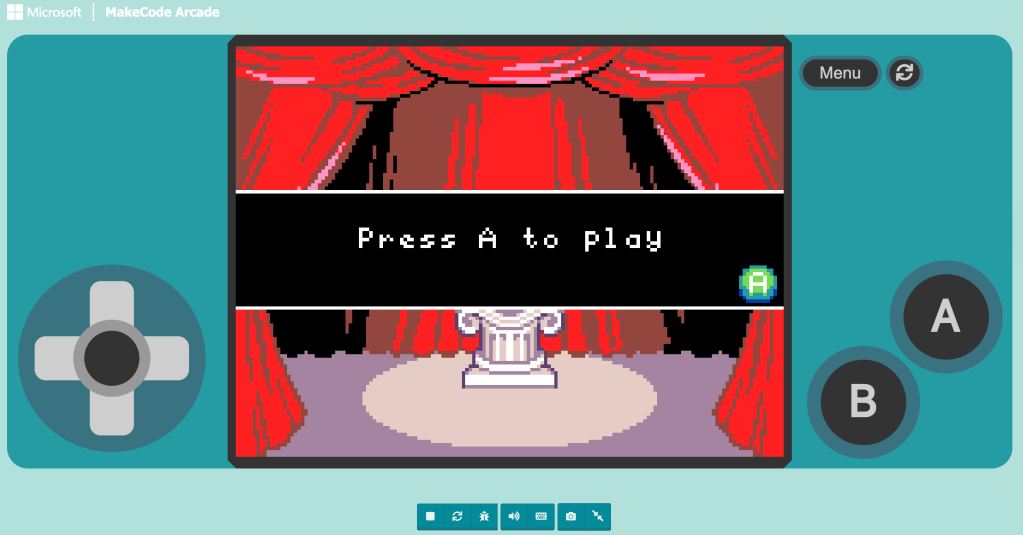
    Below are my first two projects from the beginner skill map:

    They may be simple, but they marked the beginning of something I was already excited to explore further.

  • Part of my journey in the MAET program is creating a Capstone Preparation Document. It’s a running collection of my best work: the projects, reflections, and ideas that represent my growth throughout the program.

    The goal is to have a place where I can look back, pull out key pieces, and be ready for the capstone course when it’s time to create my Annotated Transcript, Showcase, and Synthesis Essay. For now, it’s a work in progress, and I’ll be adding to it as I move through each unit.

    This page is where that collection begins.

  • 1:34 So that was my biggest wow!