When my students and I work on spiral review of concepts from previous years, they often question why we go back to “easy” math so frequently. This usually leads to a conversation about building a house. “If I wanted to build a house, where would I start?” I ask. “Would I build it on cotton candy? Toothpicks? Q-Tips?” The idea is hilarious to eight-year-olds, and their immediate response is always, “No, of course not!”
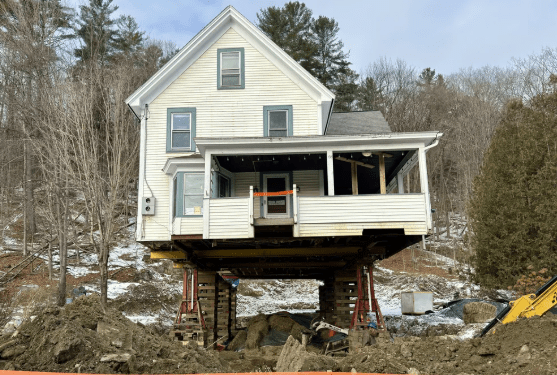
That moment opens the door to an important lesson: our ability to be successful mathematicians relies on a solid foundation. We must build and maintain strong mathematical understanding before moving forward. While their excitement fades when they realize there is no actual cotton candy involved, the message stands. Without a strong foundation, our learning is unstable.
Number and Operations are that foundation. Building strong number sense, and learning to question, fail, and grow from mistakes, is essential in early mathematics. When designing an intervention program for struggling third graders, I am reminded of the importance of returning to these foundational ideas.
Research shows that students can appear successful while relying heavily on rules and procedures without true understanding (Erlwanger, 1972; Skemp, 1978). Reflecting on Benny’s experience and Skemp’s distinction between instrumental and relational understanding has pushed me to reconsider how often students may arrive at correct answers without truly knowing why.
Within my third-grade class, I have a small group of students—my intervention group—whose knowledge ranges from deep misconceptions to unfamiliarity with basic concepts. When I work with them, our shared goal is to address misunderstandings, strengthen number sense, and move beyond counting by ones. While this may seem simple in third grade, it can be overwhelming for some students.
Mathematical proficiency includes conceptual understanding, strategic competence, adaptive reasoning, productive disposition, and procedural skill working together (Kilpatrick et al., 2001). Many of the students in my intervention group show gaps in conceptual understanding, which limits their ability to reason flexibly and persevere when challenged. This reinforces the importance of returning to foundational number and operations concepts as part of our work together.
I often wonder how many of these students were previously rewarded for speed and accuracy rather than depth of understanding. What if their struggles stem not from lack of ability, but from years of learning mathematics as rule-following rather than sense-making? Perhaps this work is not only about rebuilding skills, but also about rebuilding students’ confidence as mathematical thinkers.
This work has also deepened my Mathematical Knowledge for Teaching, particularly my Knowledge of Content and Students (KCS). Through working with this intervention group, I have become more aware of how easily students rely on counting strategies and rule-following when they lack strong place value understanding. I now anticipate common misconceptions, such as assuming that every addition problem requires counting by ones, or believing that speed matters more than reasoning. This awareness helps me design instruction that directly addresses these tendencies and supports students in developing more flexible and meaningful strategies.
Exploring different pedagogical strategies has strengthened my instructional decision-making. Practices such as thinking aloud with justification and number talks align with the NCTM Process Standards for communication, reasoning, and representation (NCTM, 2000), as well as the Standards for Mathematical Practice, particularly making sense of problems and persevering (CCSSO, 2010).
Ultimately, this work has reinforced my belief that strong number and operations instruction is not about remediation, but about restoration. Restoring confidence, curiosity, and conceptual understanding is central to my teaching. As I continue to develop my mathematical knowledge for teaching, I am increasingly aware that my instructional choices shape not only what students learn, but how they see themselves as learners.
References
Common Core State Standards Initiative. (2010). Common Core State Standards for Mathematics. National Governors Association Center for Best Practices and Council of Chief State School Officers.
https://www.corestandards.org/Math/
Erlwanger, S. H. (1972). Benny’s conception of rules and answers in IPI mathematics. Journal of Children’s Mathematical Behavior, 1(1), 7–26.
Kilpatrick, J., Swafford, J., & Findell, B. (2001). Adding it up: Helping children learn mathematics. National Academies Press. https://doi.org/10.17226/5109
National Council of Teachers of Mathematics. (2000). Principles and standards for school mathematics. NCTM.
Skemp, R. R. (1978). Relational understanding and instrumental understanding. Mathematics Teaching, 77, 20–26.
 Alexis Flanders
Leave a comment