For our final decomposition activity before moving into code, I chose something very real: my dog’s toy bin. Yes, my dog again. I couldn’t help it.
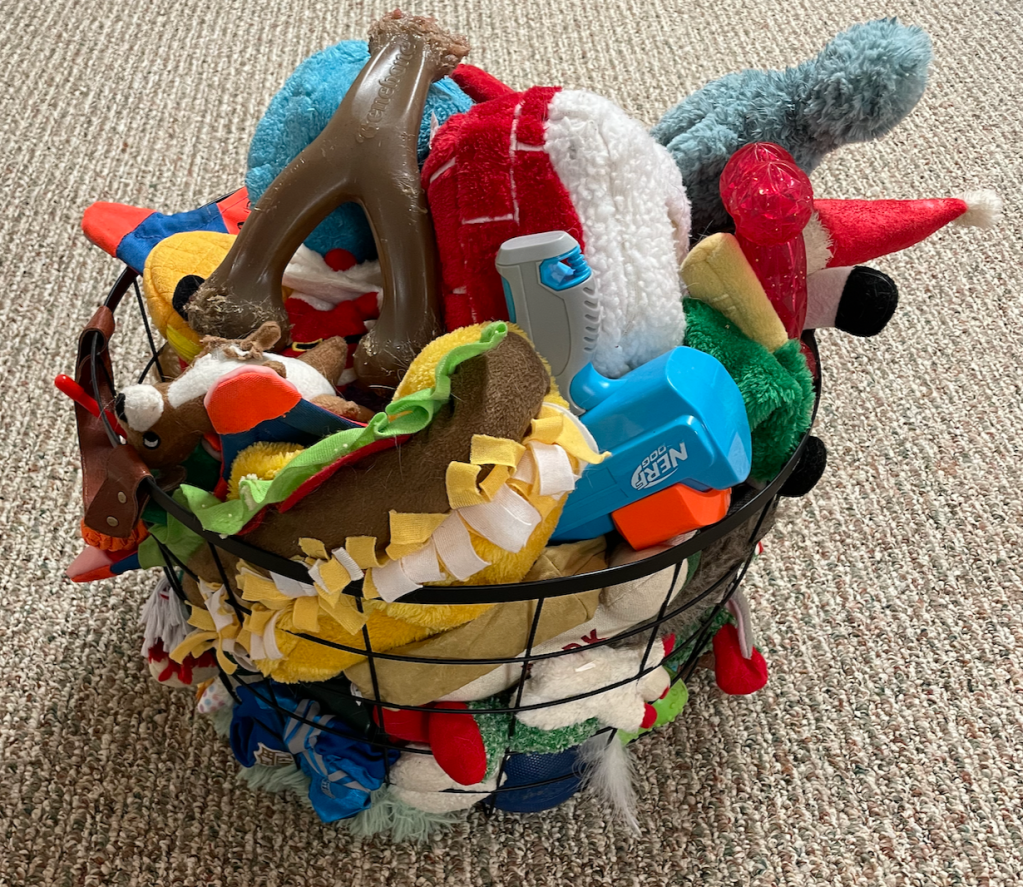
At first, it just looks like a chaotic basket of plush, rubber, rope, and squeaky objects. Once I dumped everything out and began sorting, I realized how much decision-making was involved.
I had to determine my categories first. I landed on (from left to right): clothes, ball launchers, crunchy chews, animals without squeaks, crunchy animals, fuzzy toys with squeaks, toys that get filled with other toys, toys meant to be stuffed inside other toys, frisbees, softer chews, tug toys, and finally balls.
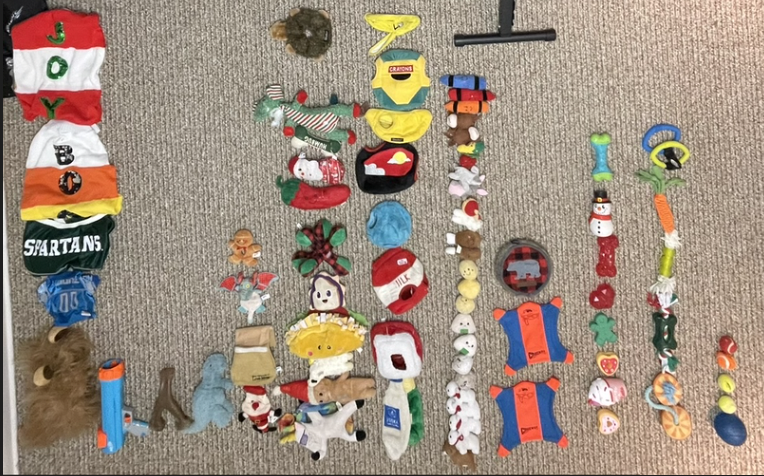
The challenge was not sorting. It was defining.
Many toys could reasonably fit into multiple categories. Is a plush dragon with crinkly paper and a squeaker a “fuzzy toy,” a “crunchy animal,” or both? Decomposition forced me to decide what criteria mattered most. I had to create rules before I could classify.
This activity made something clear: decomposition is not just breaking things into parts. It is designing a system for how those parts are organized.
And sometimes, the hardest part is choosing the categories.
 Alexis Flanders
Leave a comment