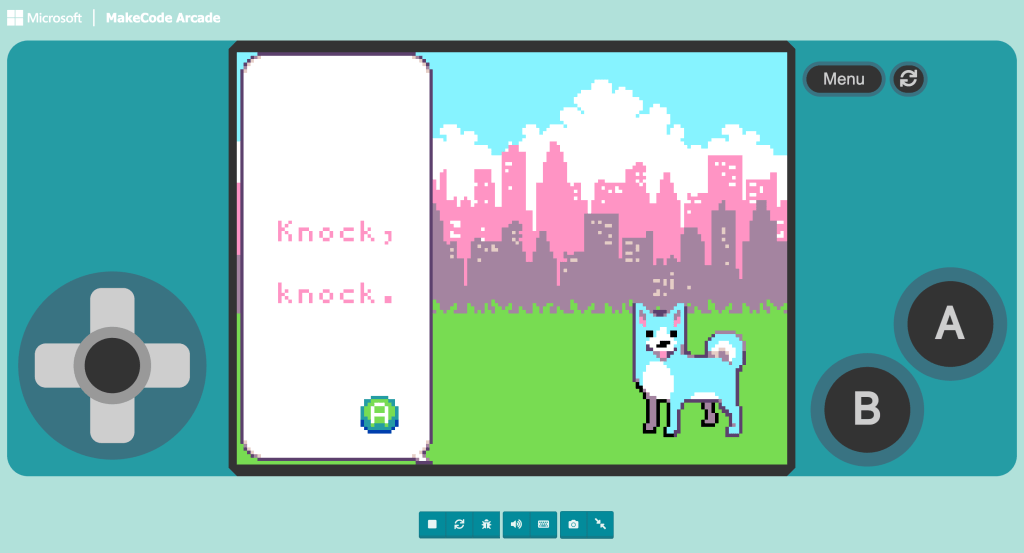
After designing a lesson that highlighted computational thinking in geography, I stepped into something completely different: creating a knock-knock joke in MakeCode Arcade.
At first, it sounds simple. It is just a joke. But building it in code forces me to think differently. I have to break down the entire interaction into small, logical steps. What happens first? What triggers the response? What should appear on the screen next? That is decomposition in action.
Even something as familiar as a knock-knock joke has a structure. There is a predictable sequence: “Knock, knock.” “Who’s there?” Name. “Name who?” Punchline. Translating that pattern into code makes the structure visible. That is pattern recognition. When I get stuck, I revisit previous projects from the beginner skill map and look for familiar code structures. Recognizing patterns in earlier work helps me build new functionality with more confidence.
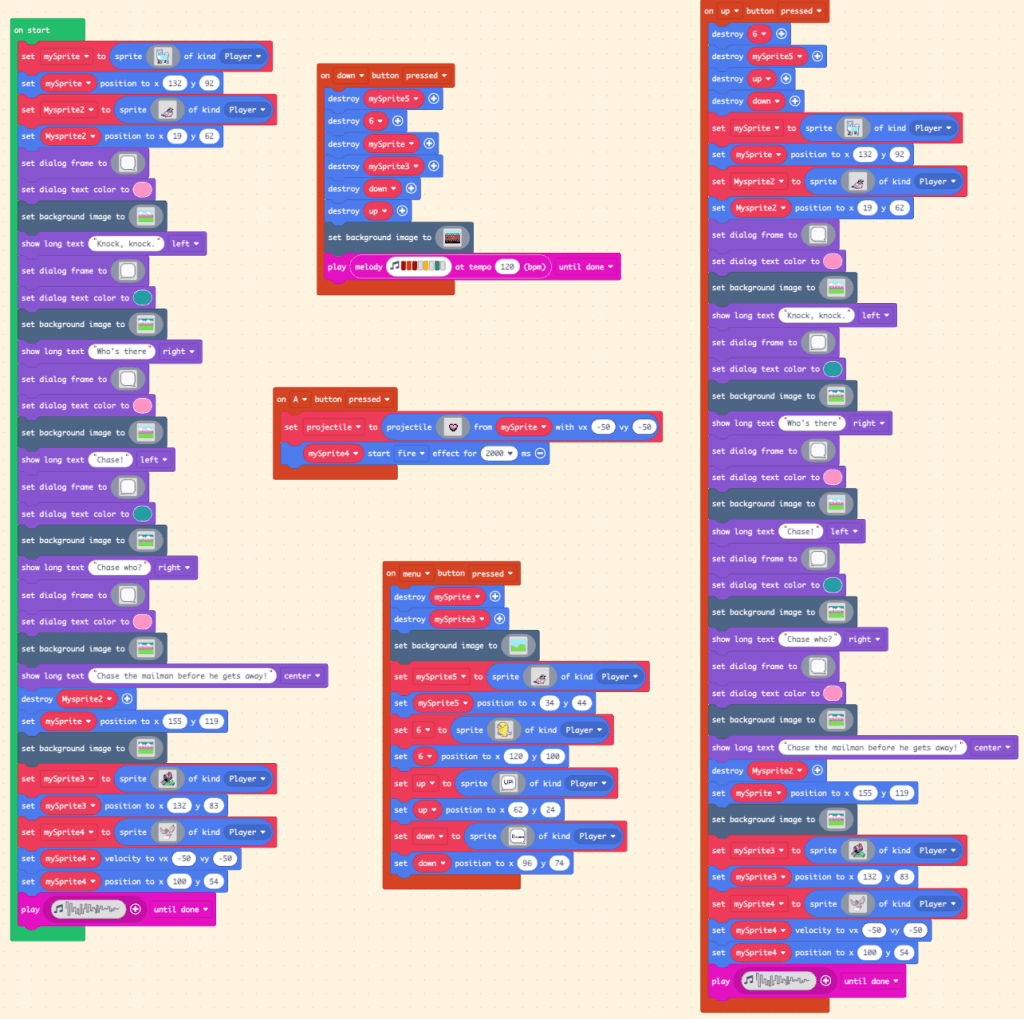
I also found abstraction challenging. MakeCode offers so many buttons and possibilities, and I kept wanting to add extra features simply because I could. Focusing only on what was essential to the joke took discipline, although I did experiment a bit beyond the scope of the assignment.
What I love about this project is how clearly computational thinking shows up. Humor, logic, sequencing, and debugging all connect. If the timing is off or the button triggers the wrong response, the joke falls apart. Code does not allow ambiguity.
This creation reminds me that computational thinking is not just about building complex games. It is about structure, precision, and intentional design, even in something as simple and playful as a knock-knock joke.
You can view my MakeCode project here:
 Alexis Flanders
Leave a comment